Review of 'Astounding'
Astounding by Alec Nevala-Lee
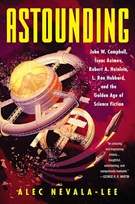 Subtitled “John W. Campbell, Isaac Asimov, Robert A. Heinlein, L. Ron Hubbard, and the Golden Age of Science Fiction”, “Astounding” is an incredibly well researched look at the men (and, yes, women) of the so-called “Golden Age” of Science Fiction (SF). This is a no-holds barred look at this period in history where male chauvinism was the norm and where woman had to push to defend themselves literally and figuratively. The book is divided into five parts defining the key periods of the time: “Part I: Who Goes there? (1907-1937)”, “Part II: Golden Age (1937-1941)”, “Part III: The Invaders (1941-1945)”, “Part IV: The Double Minds (1945-1951)” and “Part V: The Last Evolution (1951-1971) along with a prologue (“Asimov's Sword”), epilogue (“Beyond This Horizon”) and a large section of notes, By the way, if you do end up reading this book my suggestion would be to turn to the notes after finishing each chapter otherwise you will be lost trying to read through them at the end.
“Astounding” follows the story of John W. Campbell who came to be publisher of the popular SF “pulp” (so called because of the cheap paper it was printed on) magazine “Astounding” which ended up nurturing the talents of three of the greatest SF authors of all time: Isaac Asimov, Robert A. Heinlein, and L. Ron Hubbard. It shows how Campbell's dominating personality and high standards shaped these men's careers but also caused a huge amount of friction between them. We also learn of the lives of these three very different men: The young Asimov struggling to find his voice, the erudite Heinlein and the free-living Hubbard. It is the later that would have one of the biggest effects on all men with Hubbard's “discovery” of Dianetics and eventually the “Church of Scientology”. The author spends a lot of time on this in “Part IV” of the book as we see the documented origins of this movement then moving onto how it evolved over time with various lawsuits and Hubbard eventually seeking to distance himself from it all though continuing to accept weekly payments from the organization. As Campbell aged he lost interest in the science aspect of his work and sought out non-scientific sources of truth such as Dianetics which tended to feature quite heavily in “Astounding”.
The women in these men's lives are also covered in a great amount of detail and honesty, documenting the good and bad. The attitudes of these men to their wives and loved ones can possibly be explained by the times but it is certainly disturbing through modern eyes, for example, Asimov who was well known for pinching woman's bottoms at all opportunity and seeing them purely as sex objects despite having been married multiple times. There are even some truly horrific events documented here that disturbed me greatly. However, here this behaviour is not excused away but rationally documented to provide a full view of these men rather than simply examining their contribution to SF. None of them were terribly successful as husbands and none of them terribly loveable…charming perhaps, loveable, no.
It is fair to say that none of the men featured come off terribly well which, I suppose, is not too surprising given the effort to rationally, and completely, document each of them - for better or worse. They were human after all and very much of their time despite their ability to see alternative realities and futures (setting aside their education and scientific acumen). It is nice to see this by-gone age reviewed with such attention to fact, giving us new insights into the men that many people still believe to be the SF authors greatest of all time - A claim that appears to be at least partly justified with the evidence presented. It would be so easy just to ignore this era and move on with the future but retrospection is useful to show where we have come from and why things are they way they are now. This helps us to learn and move forward but we should not forget or dismiss it. The final sections of the book talk about the impact that these men have had on society and their profession which has moved on from these days in leaps and bounds to a far more enlightened attitude than they shared.
An interesting book that strives to tell the story of a key era in SF - Warts and all - And, largely succeeds. Fascinating, if slightly long (400+ pages before notes), read for those interested in SF, and the authors from the “Golden Age of SF”.
Rating: “Nearly perfect, but not quite”
Review Date: 2026-02-17
Genre: Non-Fiction
Publisher: Dey St.
Publication Date: 2018
ISBN: 9780062571946