Review of 'The God Delusion'
The God Delusion by Richard Dawkins
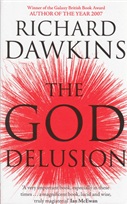 A highly contentious book, “The God Delusion” attempts to convince readers that not only that God (any God) does not exist but that we should actively seek to reject any God-worshipping religion. He makes his point through a series of chapters: “A Deeply Religious Non-Believer”, “The God Hypothesis”, “Arguments for God's Existence”, “Why There Almost Certainly Is No God”, “The Roots of Religion”, “The Roots of Morality: Why Are We Good?”, “The 'Good' Book and the Changing Moral Zeitgeist”, “What's Wrong With Religion? Why Be So Hostile?”, “Childhood, Abuse, and the Escape From Religion” (a theme that Dawkins is obviously very passionate about - not forcing a child into your religion), and “A Much Needed Gap?”. After the dramatic earlier chapters the final chapter stops to put it all into context and see a way forward. As you can see the book seeks to cover off all aspects of his argument including attempting to understand the minds of believers and those who see religion as a force for good (even if they do not believe in it themselves). Throughout the book Dawkins is at pains to explain his viewpoint and address any anticipated criticism right then and there. Indeed he makes reference to his personal experiences regarding his religious upbringing and the ridicule he has suffered as a result of his beliefs.
Dawkins's general thesis is that there is no conclusive proof of God with believers actively shunning reason and discourse. It is this last point that I think is one of the biggest things that struck me when reading the book - People are happy to openly criticize scientific thought, sexual politics, political politics, etc. but attempt to criticize or question religion and you immediately face outright hostility and prosecution both from society and those that police it. He is frustrated that we cannot discuss religion like we can other topics and this book is an attempt at such a discussion despite his knowing full well that it will make a lot of people very angry at him. In the book there are a number of quotes from so-called religious people both extremely insulting all the way to threatening his life which seems quite contrary to what the religions are supposed to espouse (peace and love, for example).
He continues his arguments by suggesting that religions have been the source of so much pain and suffering in history. One needs only to look at the latest news of the conflicts in the middle east to see this is the case. When one group believes in something and another group believes in something else which is completely incompatible and with no room for compromise, what do you think will happen? How is something like this resolved? Dawkins argument would be for everyone to step away from religion with the groups having a reasonable, logical discussion of their differences to come to a conclusion. Of course, sadly, this will not happen and many more will die as a result. It is hard to see any good that comes out of religion with the intolerance it fosters (I believe what I believe whether it is logical or not, I don't care what you think, I am right, you are wrong…etc).
Another theme of this book is the contradictions in religious texts (often written well after the events being discussed, by numerous people and revised over the years) and how, if these are to be the basis for how we live, we are all in a lot of trouble. Particularly troublesome are those that treat the texts as the literal truth with the brutal violence, sexism, and contradictions they contain. These people are particularly zealous and will harbour no criticism or question of their belief.
The argument that people cannot have morality without religion is another myth that Dawkins seeks to dismiss though perhaps with less conviction than some of his other points. The suggestion is that religious people have the threat of punishment hanging over their head to force them into being nice to people which makes Dawkins wonder why they need such a threat in the first place? If there was no such threat would those same people simply cause wanton violence and do whatever they want? Do they really need the threat to be good? His argument is that religion, of course, is not required for people to be nice to one another and that it is in our best interest to do so. A threat is not required though laws are to ensure those that try to inflict harm on others are punished.
The book is quite easy to read and Dawkins' arguments are very convincing if, perhaps, explained with quite a lot of words. He does return again and again to the same themes though approached from different angles but it does get a bit tedious at times. It is obvious he is doing all he can to address any criticism that may be thrown at him and in this I think he does a great job.
Definitely worth a read for anyone who is curious about the hold that religion has on the world and on it's population.
Rating: “Nearly perfect, but not quite”
Review Date: 2026-03-24
Genre: Non-Fiction
Publisher: Black Swan
Publication Date: 2006
ISBN: 9780552773317